Territory Tiles Faith Strategy
Reviews
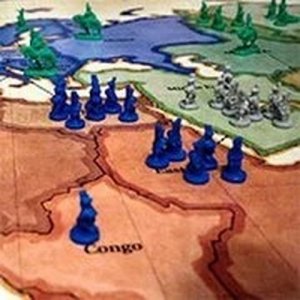
Territory Tiles Faith Strategy succeeds by making every resource count. The faith system is not just a currency but a strategic lever tied to your map presence. Balancing army movement with temple upgrades creates constant tension. The 12-turn limit keeps matches tight and forces players to plan ahead. It is a thoughtful, replayable experience for fans of turn-based strategy.
Description
Core Loop: Region Control & Faith Economy
Each match unfolds over a fixed number of turns. Players take turns selecting regions to move their pieces. The central resource, faith, is generated by holding regions and by having units pray at temples. This faith then funds new units and temple upgrades. Every action—moving soldiers, constructing temples, or upgrading existing structures—costs faith, creating a constant tension between expansion and investment. The player who controls the most regions when the turn limit is reached wins.
Strategic Depth: Balancing Army & Temple
Success requires balancing two competing priorities: military presence and religious infrastructure. Moving soldiers into enemy territory can capture new regions, but leaves your own temples undefended. Upgrading temples increases faith generation, enabling larger armies later, but those faith points could have been spent on immediate expansion. Each decision has a trade-off, and the optimal strategy shifts based on your opponent's moves. The game rewards players who can adapt their approach turn by turn.
Faith as a Unique Resource
Unlike traditional territory control games that use gold or mana, this game ties its economy directly to the map. Faith is not a static pool but a dynamic resource influenced by your territorial holdings and temple upgrades. Controlling a region with a temple generates more faith than a region without one. This system encourages players to build temples in their safest territories while using faith from those temples to fund attacks elsewhere. It adds a layer of spatial reasoning to resource management.
Turn Structure & Decision Pacing
Each turn presents a limited set of meaningful choices. Players cannot do everything at once; they must prioritize. The turn structure forces you to think several moves ahead. Do you spend faith on a temple upgrade that will pay off in three turns, or do you use that faith to build soldiers now and try to seize a key region? The pacing is deliberate, giving each action weight. This makes every match feel tense and rewarding, as even small advantages can snowball into victory.
Compatibility
Faq
How long does a typical match of Territory Tiles Faith Strategy last?
Is Territory Tiles Faith Strategy suitable for younger players?
Can I play this game solo or with more than two players?
What happens if both players control the same number of regions after 12 turns?
Are there different maps or scenarios available?
How does the faith system differ from other resource mechanics?
Related Picks

Wreckage Navigator Puzzle
Bee Maze Puzzle: Homeward Flight

Panda Rescue Solitaire Puzzle
Medieval Village Builder Idle

Golden Move Quest: Puzzle Gem Game
Charge Catch Puzzle Game

Grid Logic Puzzle Game

Kingdom Merge: Tower Defense Strategy

One Level Tower: Magical Puzzle Quest