Picture Assembly Puzzle Challenge
Reviews
Picture Assembly Puzzle Challenge focuses on a single, clear mechanic: dragging fragments into place to rebuild an image. Its strengths are flexibility and low friction. The rotation and background options let players decide how much spatial reasoning they want, and the browser format means no installation. It suits casual players who want a short session and those who prefer a longer, more focused puzzle. The main limitation is that the input does not describe additional modes, progression systems, or multiplayer features.
Description
Choosing and Assembling Images
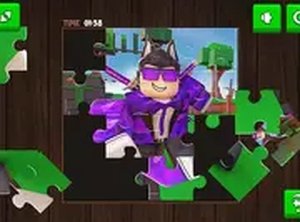
Players start by selecting from a collection of bright, detailed pictures. Each image is divided into several fragment sets, and these sets represent different complexity levels. Simpler arrangements serve as a starting point, while more intricate compositions become available as players gain confidence. The core action is dragging fragments into their correct spots to reconstruct the full picture. The interface is built for straightforward interaction, so picking up the basic mechanic takes little time.
Adjusting the Difficulty
Two settings let players change how demanding a puzzle feels. The rotation option requires pieces to be turned before they fit, which adds a spatial reasoning step to every placement. The background toggle removes visual clutter, helping players concentrate on the fragments themselves. Because these options can be switched on or off, the same image can serve as a quick session or a longer, more focused task. [IMG_0]
Playing Across Devices
The game runs directly in a browser and adapts to various screen sizes. On mobile, touch input handles the dragging; on desktop, a full-screen mode reduces distractions. No downloads or installations are required, so access is immediate whenever a player has time to spare. The lightweight design keeps performance consistent across devices.
What the Puzzle Exercises
Regular engagement with this type of puzzle supports pattern recognition and problem-solving. Mentally rotating pieces and identifying matching edges exercises visual processing. Over time, players often find they can handle more complex fragment sets with greater ease, which gives the difficulty progression a practical purpose beyond simply finishing an image.






Editorial Notes