Ocean Logic Quest: Monkey Puzzle
Reviews
Ocean Logic Quest: Monkey Puzzle trades speed and scores for observation and sequencing. Each scene asks you to find interactive objects and work out the right order of actions, with the monkey offering subtle visual hints. Bright colors and gentle background creatures keep the mood relaxed. The main limitation is that players seeking fast-paced or competitive puzzles may find the pace too slow. It best suits younger children and anyone who enjoys quiet, self-paced logic challenges.
Description
How the Puzzle Chain Works
Each scene in Ocean Logic Quest: Monkey Puzzle presents a small set of interactive objects, and the challenge is figuring out what order to use them in. A locked chest might need a key that sits inside a shell, and that shell only opens after a nearby sea creature receives a glowing plant. The game never tells you the sequence outright. You work it out by observing what changes when you interact with something, then following the chain of cause and effect until the puzzle resolves. That structure rewards patience more than speed, because rushing usually means missing a step.
Reading the Scene
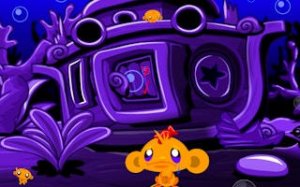
Interactive points are scattered across each scene, and not all of them are obvious. Some objects sit in plain view; others are partly hidden behind seaweed or rocks. The monkey character responds to nearby items with a smile or a gesture, which acts as a soft hint rather than a direct instruction. This nudges players toward careful scanning instead of random clicking. Over time, you learn to notice small environmental details that signal where the next step in the chain might be.
Pacing and Feedback
There are no timers and no scoring pressure, so you can sit with a scene for as long as you need. When a puzzle is solved, a short animation or sound effect confirms the result and the next area opens. That new area may introduce a different type of object or a slightly longer sequence, which keeps the difficulty moving without adding stress. The reward loop is simple: observe, test, solve, move on.
Visual Style and Audience
The underwater world uses bright, cheerful colors and simple character models. Fish and crabs drift gently in the background, adding movement without pulling attention away from the puzzle. Because the game removes time limits and scores, it suits younger players and anyone who prefers a quiet, self-paced experience. The design assumes the player is willing to look closely and think a step ahead, not react quickly.







Editorial Notes