Memory Match Adventure Puzzle
Reviews
Memory Match Adventure Puzzle sticks to a classic card-matching formula and adds a samurai theme plus a forgiving timer. The expanding grid provides a clear difficulty curve, and the scoring system gives young players a sense of progress. It is best suited to children who need practice with visual memory and attention. The main limitation is that the core loop is simple, so older or experienced players may find it repetitive.
Description
Core Matching Mechanic
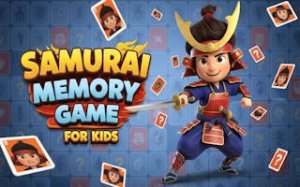
Memory Match Adventure Puzzle asks players to flip two cards at a time to reveal samurai-themed images. When the images match, the cards stay face-up and the player earns points. When they do not match, the cards flip back over. That simple rule creates the entire challenge: every failed attempt is a chance to remember where a specific image sits on the grid. There are no complex controls or hidden rules to learn, which keeps the focus on observation and recall.
Progressive Grid Difficulty
The game starts with a small grid and increases its size as players advance. A larger grid means more cards to track, so the memory demand rises naturally with each level. This progression is the main source of difficulty. Instead of adding new rules, the game asks players to hold more positions in mind and to plan which pairs to pursue next. The result is a difficulty curve that adapts to growing skill without introducing unfamiliar mechanics.
Timer and Scoring
A timer runs during play, adding a gentle sense of urgency. It is designed to motivate rather than pressure, so children can focus on careful observation instead of rushing. Each matched pair adds to the score, giving players a clear record of progress. The combination of timer and score encourages strategic thinking: players must decide whether to guess quickly or take a moment to recall a card's location.
Samurai Theme and Audience
Colorful samurai-themed artwork gives the matching cards a consistent visual identity and adds a light narrative layer. The theme is decorative rather than complex, which suits the junior audience. Because the rules are minimal and the timer is forgiving, the game works in home or school settings. It is aimed at young learners who enjoy puzzles and want to practice concentration and visual memory in a positive, rewarding environment.









Editorial Notes