CrossPath Logic Puzzle
Reviews
CrossPath Logic Puzzle strips away timers and flashy distractions, leaving a pure logic challenge. The core idea—drawing a set number of lines from each diamond while avoiding obstacles—is easy to grasp but scales into complex spatial problems. The undo button encourages experimentation, and the lack of time limits makes it welcoming for younger players or anyone who prefers to think before acting. The main limitation is that the game offers no story or multiplayer; it is purely a solo brain teaser. If you enjoy games like Sudoku or flow puzzles, this fits the same niche.
Description
Connecting Diamonds with Numbers
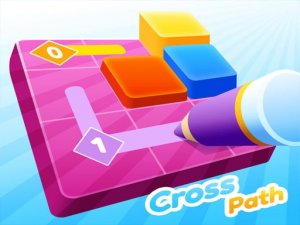
CrossPath Logic Puzzle presents a board filled with numbered diamonds. Each diamond displays a number that tells you exactly how many lines you can draw from it. Your job is to drag from a diamond into an empty adjacent space, building a network of lines. The catch: lines cannot overlap, and every diamond must be used exactly as many times as its number indicates. It's a test of planning and spatial awareness, not speed.
Obstacles and Board Complexity
Blocked cells, called obstacles, appear on the board and cannot be crossed. Early puzzles keep obstacles sparse, but later levels add more diamonds, higher numbers, and trickier obstacle placements. That progression forces you to think several moves ahead. A single wrong line can block a critical path, so the undo button becomes a key tool for experimenting without penalty. There is no timer, so you can pause and recalculate whenever you like.
Who It's For and How to Improve
Because the rules are simple and there is no time pressure, CrossPath Logic Puzzle suits a wide range of players, including children and adults who enjoy logic puzzles. The game claims to help with spatial reasoning and pattern recognition. To get better, start with diamonds that have the highest numbers, since they demand the most connections. Sketch possible routes mentally before drawing, and use undo freely to test ideas. Regular practice will make complex boards feel more manageable.










Editorial Notes